Calgary Karate Alternative | Traditional Martial Arts for Kids & Adults
Looking for karate in Calgary? Learn how traditional martial arts differ, and why some students choose a more integrated, long-term approach to training.
When people look for karate in Calgary, they are usually not just looking for karate.
They are looking for something structured and traditional — a place where there is discipline, respect, and a clear path of development. A place where students wear uniforms, bow when they enter the mat, and build confidence through consistent training. For many people, the word “karate” simply represents all of that.
In reality, there are many martial arts in Calgary that offer these same values — often in different ways, and sometimes with a deeper connection to their origins. At Calgary Rakushinkan, we offer that alternative. For those searching for "Calgary karate", it’s worth understanding what karate actually is, and what other traditional martial arts options exist in Calgary..
Karate Classes in Calgary – Why People Search for Them
When people search for karate classes in Calgary—whether for themselves or their children—they are usually looking for the same core things: confidence, discipline, focus, and a structured environment.
Karate has become the default term for this kind of training. It is familiar, widely recognized, and easy to search for — even for someone who has never stepped into a dojo. But what people are really looking for is not a specific style. They are looking for a traditional martial arts experience.
It is also worth recognizing how widely the term “karate” is used. For many people, it has become a general label for traditional martial arts as a whole — whether referring to Japanese or Okinawan karate, Korean arts like taekwondo, Chinese martial arts such as kung fu, or even more modern, performance-oriented systems. Much of this comes from how martial arts were popularized in film and media, particularly from the 1970s onward, where “karate” became a kind of shorthand for all of these practices.
In practical terms, there are many options available. There are dozens of karate and karate-adjacent schools across Calgary, and in North Calgary alone there are well over 30. These striking-based systems — centered on punching, kicking, and long-form practice — are by far the most common and widely available.
For people searching for karate in Calgary, what they often want is a traditional, structured practice. Karate does offer that, but it is typically a striking art, focused on punches and kicks. That kind of training is not the only path.
You can experience that same structured, traditional approach through other classical Japanese martial arts, without the emphasis on striking and long solo forms.
A Different Path: Traditional Japanese Martial Arts
At Calgary Rakushinkan, our training is rooted in classical Japanese martial traditions, closer in spirit to older samurai-era methods than to modern sport systems. You can read more about our approach to traditional martial arts here.
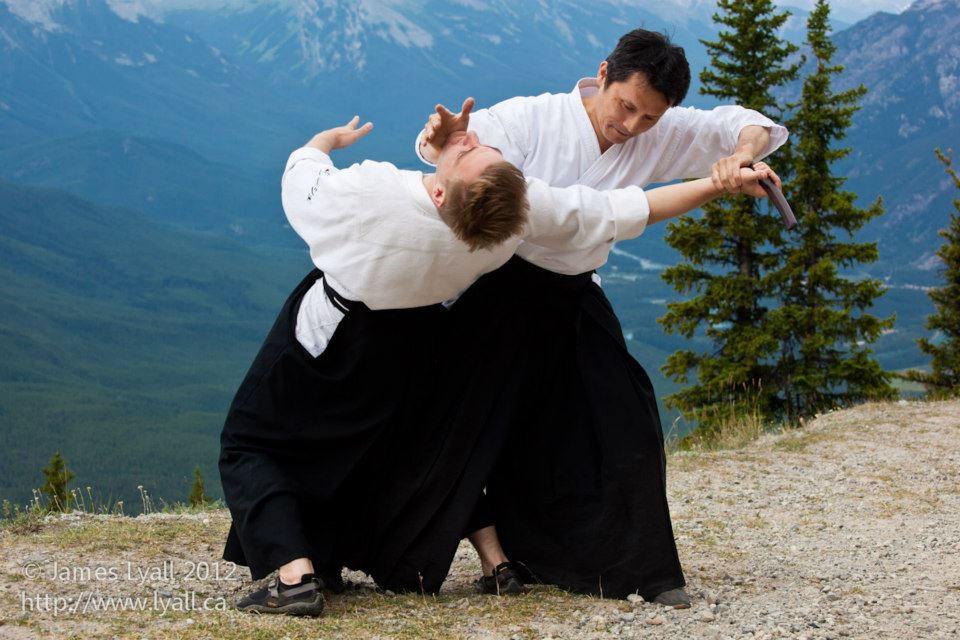
We practice aikido alongside traditional sword arts and classical jujutsu (grappling) principles, not as separate disciplines, but as expressions of the same underlying system. Training emphasizes precision, timing, structure and leverage over strength or aggression. The goal is not simply to perform techniques, but to understand how movement works at a deeper level and to develop skill that lasts over time.
Aikido vs Karate – What’s the Difference?
Both aikido and karate can build discipline, confidence, and strong fundamentals, but their approach is fundamentally different.
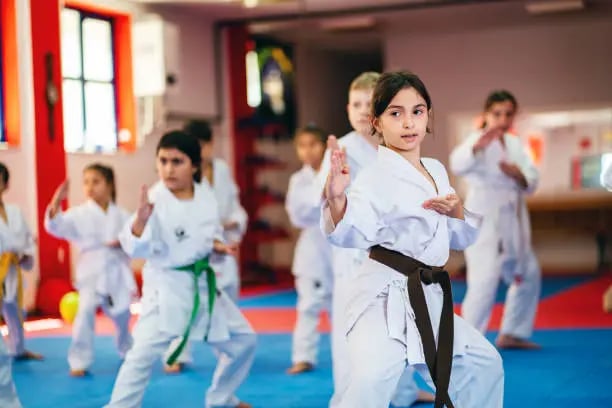
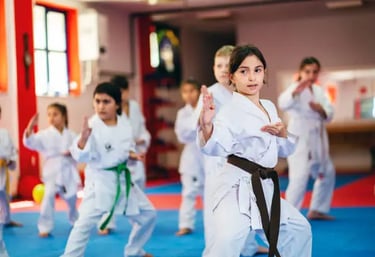
In simple terms, karate often develops strength and conditioning, while aikido develops power without relying on strength. For those looking for a long-term path, this difference becomes increasingly important.
Tradition Matters: Modern Martial Arts vs Classical Roots
When people think of “traditional martial arts,” they often picture what they have seen in movies or popular culture — uniforms, belts, and striking techniques.
In reality, many widely practiced martial arts today — including most forms of karate — are modern systems, developed and organized in the 20th century. While they draw from older practices such as Okinawan tōde and Chinese martial arts, their structure has been shaped by education systems, sport, and mass instruction.
At Calgary Rakushinkan, our approach is different. Our training is closer to koryū — the older Japanese martial traditions developed by the samurai. These systems were not designed for competition, but for effectiveness, adaptability, long-term cultivation and transmission. This difference changes how training is approached, and what it ultimately produces.
Power Without Strength
In many modern systems, power is built through strength, conditioning, and repetition. In aikido (and other Japanese systems), the focus is different.
Power comes from structure, alignment, timing, and the coordinated use of the entire body. The goal is not to overpower an opponent, but to control them efficiently — without unnecessary effort. This is often the first thing people notice when they encounter high-level practice: the absence of strain, and the presence of effortless control.
The Missing Piece: Weapons and Integration
One of the clearest differences between modern and classical martial arts is the role of weapons. What most people don’t realize is that traditional martial arts were never separated into “striking,” “grappling,” or “weapons.” These distinctions are modern.
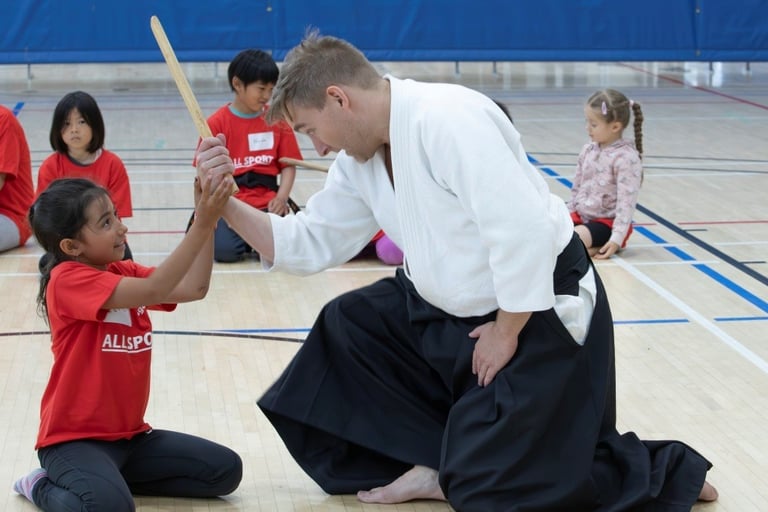
In older Japanese systems, empty-hand techniques were never developed in isolation. They were closely tied to the use of weapons — especially the sword. At Calgary Rakushinkan, this relationship is preserved and nurtured.
What you see in aikido only fully makes sense when viewed through this relationship. (Sadly most aikido practitioners are unaware of this.)
Sword training informs how we move, how we manage distance, and how techniques are applied. Aikido, classical jujutsu, and weapon arts are not separate practices, but part of a single, integrated system.
A More Complete Martial Art
Today, people often think of “mixed martial arts” as combining different fighting styles. Historically, Japanese martial traditions already approached training this way — not by mixing unrelated systems, but by developing a unified framework that included striking, grappling, joint control, and weapon use.
This is the approach we follow — not a collection of techniques, but a coherent martial system with deep historical roots.
More Than Techniques: How Traditional Arts Are Taught
One of the most important differences between modern martial arts and older traditions is not just what is taught, but how it is taught.
In classical Japanese arts, training is built around kata — but not in the sense of memorizing sequences or performing movements for their own sake. Each form is a method of transmission, containing principles of timing, structure, distance, and strategy. It is a way of passing down knowledge that cannot be easily explained in words.
What may appear simple — or even unusual — begins to make sense as the underlying context is understood through practice. In this way, training is not about collecting techniques, but about internalizing a system.
Without that context, practice can become external — focused on shape and repetition, but disconnected from function. With it, even basic forms become increasingly meaningful over time. This is the approach we preserve.
Why This Matters for Students
At first, these differences may not seem important, but over time, they become fundamental: the difference between learning techniques and understanding a system, between practicing movements and developing real skill, and between short-term training and a path that can continue for decades.
My Own Path: From Karate to Aikido in Japan
I began training in karate as a child in the mid-1980s, studying Chito-ryu through school and into university.
While I valued the discipline and structure, and the skills I was able to acquire, I felt there was a lack of depth. What I saw was simply more patterns to memorize, but not necessarily more skill, understanding, or ability. I realized that much of the deeper context and purpose had been lost in the transmission and development of modern karate.
During university, I began exploring other martial arts, which eventually led me to Japan in 2004. There, I met Ishikawa Sensei.
What stood out immediately was his ability to generate power and break balance without visible external effort — no tension, no reliance on strength, only precise structure, timing, and movement. It was completely different from anything I had experienced before. More importantly, his training methods were designed to teach that ability directly.
Through him, I was introduced not only to aikido, but also to deeper connections with traditional sword arts and classical jujutsu. What I found was a far more integrated system — where empty-hand techniques and weapons were part of the same underlying principles.
That experience fundamentally changed how I understand martial arts, and it continues to shape how we teach today.
Martial Arts for Kids
For children, the benefits of this kind of training are both immediate and long-lasting.
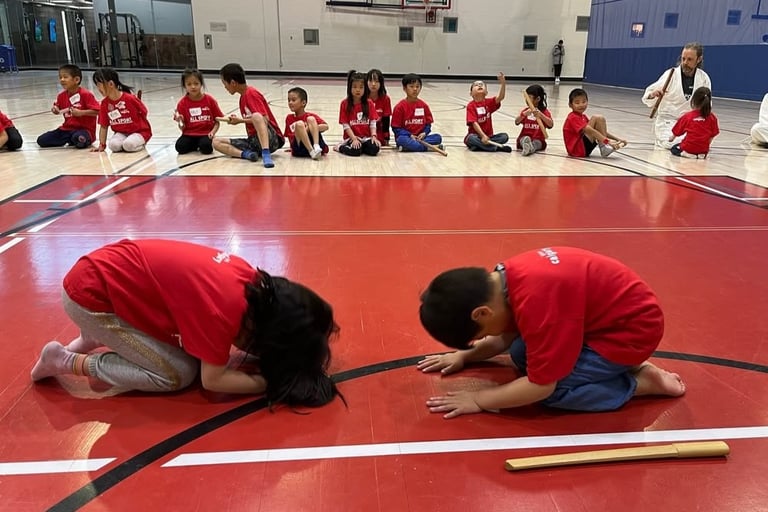
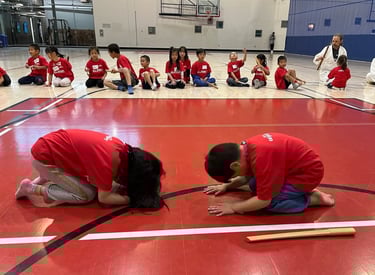
For families looking for kids martial arts in Calgary, our focus is not on competition, but on developing confidence, attention, and self-control in a structured and respectful environment.
Many parents notice that:
It helps shy kids come out of their shell
It teaches calm focus without encouraging aggression
There is no competition pressure—only steady, personal development
Students learn to move calmly, listen carefully, and build real confidence over time — not through aggression, but through understanding.
Is This Right for You?
If you are searching for karate in Calgary, you are likely looking for something meaningful — not just an activity, but a path.
If you are looking for a striking-based system built around punches and kicks, there are many excellent karate schools in Calgary.
If you are looking for a more integrated traditional martial art—one that develops movement, awareness, structure, and timing across both empty-hand and weapons—then Calgary Rakushinkan offers a different path.
You don’t need to decide based on description alone.
👉 Try a class and experience the difference directly.
Try a Class
The best way to understand the difference is to experience it directly. We welcome complete beginners, both adults and children.
We are free to try out so simply sign up for a free trial class at our North Calgary dojo!
Common Questions – Karate and Martial Arts in Calgary
Is aikido better than karate?
It depends on what you are looking for. Karate often focuses on striking, conditioning, and repetition, while aikido is more of a grappling art emphasizing control, balance-breaking (kuzushi), timing, and efficient movement. For those looking for a non-competitive, long-term path with deeper integration of principles, aikido may be a better fit.
What is the difference between aikido and karate?
Karate is primarily a striking art, built around punches and kicks. Aikido focuses on balance, control, and joint techniques, with movement principles that are closely connected to traditional weapon arts. The training methods and underlying goals are quite different.
Is aikido good for kids?
Yes. Aikido helps children develop confidence, focus, and coordination in a structured and respectful environment. Because it does not rely on competition or aggression, it allows children to build confidence steadily over time.
Do I need to be strong or athletic to start aikido?
No. Aikido training is specifically designed to develop power through structure and coordination rather than strength. Many people begin with no prior experience and build ability gradually.
Is this similar to other martial arts in Calgary?
At a glance, many martial arts schools in Calgary can appear similar. However, training methods and underlying principles vary significantly. Our approach is rooted in classical Japanese traditions, with an emphasis on integration, precision, and long-term development rather than competition.
How is practice different between karate and aikido?
Traditional martial arts rely on kata (form) based practice. This is the case for karate, aikido and many other martial arts.
In karate, kata are typical solo patterns which consist of a series of techniques performed sequentially.- is the case in taekwondo, kung fu and numerous other arts. In aikido (and traditional/koryu jujutsu, and kenjutsu), kata are paired and role based. They are typically short. One partner attacks in a prescribed way and the other responds in a prescribed way with the level of challenge determined by ability of the participants.
What are the best martial arts in Calgary if karate isn't quite right?
It really depends on what you're after. If you're craving flashy forms or performance—think high kicks, spins, competitions—modern wushu or show-style karate groups pop up around town. For something more grounded, grappling arts like judo, Brazilian jiu-jitsu, or even wrestling are everywhere; they're solid for real-world control, though they lean sporty over traditional.
But if you want that classic feel—partner drills, discipline, no heavy striking—Aikido (or its root, koryu jujutsu) keeps the structure and respect without the bruises. Sword arts like iaido or kenjutsu do the same, just with blades—super rare, but they exist here in Calgary if you're into that precision.
Bottom line: karate's great for some, but plenty switch to calmer, integrated training. Try a free class if any of that clicks. 😉
Calgary Rakushinkan
カルガリー楽心館
Authentic Aikido and classical Japanese martial arts in Calgary.
LOCATIONS:
Mount Pleasant Community Association
602 22 Ave NW
Calgary, AB T2M 1N7
Winston Heights-Mountview Community Association
520 27 Ave NE
Calgary, AB T2E 2A6
© 2025. All rights reserved.