What is Koryu?
Classical Japanese Martial Traditions Before the Modern Era
ARTICLE
12/18/20253 min read
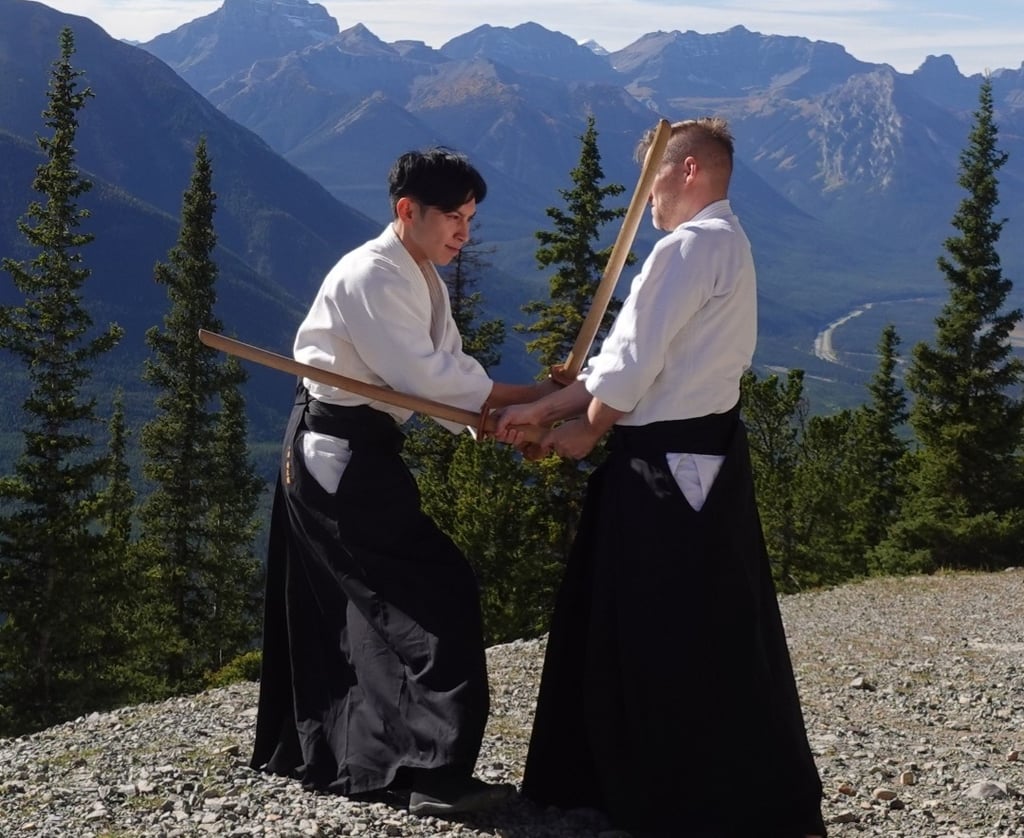
Koryū (古流) literally translates to “old school” or “old style” and refers to Japanese martial arts schools founded prior to the Meiji Restoration in 1868.
The Meiji era marked a period of significant social, political, and cultural change in Japan, including the modernization and Westernization of many aspects of society. Coinciding with this was a sharp decline in the practice of kobujutsu (古武術) and in the number of surviving koryū. Of course, many koryū had already gone extinct earlier, either due to a lack of practitioners to pass on the art or through ryūha (流派) evolving and changing into new ryūha. Koryū are inherently historical and classical, having their origins in samurai traditions and methods of combat and self-defense. (It should be noted, however, that not all martial arts ryūha were strictly samurai arts.)
We should also address martial arts that are not considered koryū. Martial arts founded after 1868 are generally referred to as gendai budō (現代武道), meaning “modern martial arts.” Gendai budō typically retain traditional elements while incorporating modern methods, contexts, and philosophies. The clearest and most familiar examples are jūdō, aikidō, and kendō. Koryū are not “better” or “worse” than gendai budō in any way, but it is important to recognize that there is a clear distinction. Put simply, that distinction lies in historical context and developmental trajectory.
Within koryū, there exists a spectrum ranging from highly specialized schools to comprehensive schools known as sōgō bujutsu (総合武術). Some schools include a wide range of weapons, methods, and strategies for armed and unarmed combat, as well as traditions not directly related to combat. Other schools are highly focused on a specific discipline. Naturally, many fall somewhere in between.
Yagyū Shingan-ryū, for example, is a comprehensive tradition that includes yawara (柔), or jūjutsu, practiced both armored and unarmored, as well as kenjutsu, battōjutsu (also known as iaijutsu), bōjutsu, naginatajutsu, sōjutsu (spear), torite (arresting and capturing methods), kappō (healing and resuscitation), and more. By contrast, Kurama-ryū is a kenjutsu-only school, focused specifically on ōdachi, with a relatively small technical curriculum.
It is fairly common to find organizations that practice several specialized koryū in order to form a more comprehensive system of training. Likewise, elements of sōgō bujutsu koryū often exist in a distributed or fragmented manner across multiple organizations.
What is essential in koryū is the student–teacher relationship and the process of transmission. Training in koryū is a serious undertaking. Students and teachers practice diligently so that the tradition may be transmitted accurately to future generations. Koryū groups tend to be small, with a high degree of direct contact between teacher and student and a strong emphasis on hands-on instruction. While public demonstrations are common, the deeper meaning of techniques, principles, and underlying philosophy is traditionally communicated orally from teacher to student as part of the transmission process. This creates a direct and personal connection across generations of practitioners.
Beyond physical technique, koryū teachers also pass on the cultural, ethical, and philosophical dimensions of the art. This holistic approach ensures that students do not merely become technically proficient, but also understand the broader historical and cultural context of their training.
The student–teacher relationship in koryū bujutsu is therefore a dynamic and multifaceted bond that extends beyond the dōjō. It reflects traditional values of respect, responsibility, and commitment, and embodies the shared duty of preserving the authenticity and legacy of the art for future generations.
At Calgary Rakushinkan, koryū are studied in their proper historical context and in dialogue with later martial traditions. The dojo preserves the Aizu transmission of Ono-ha Ittō-ryū, a classical koryū kenjutsu tradition with roots in the early Edo period, while also practicing arts such as Daitō-ryū Aiki-jūjutsu and Mugenshintō-ryū Iaijutsu, which are generally classified as gendai systems despite their strong classical influence and technical continuity. This combined approach allows practitioners to understand koryū not in isolation, but as the foundation upon which later Japanese martial arts developed. Calgary Rakushinkan’s training emphasizes kenjū ittai—the unity of sword and empty-hand principles—linking classical sword traditions to modern practice in a historically informed way.
Further reading:
A good article on this can be found at koryu.com website: "A Koryu Primer" by Diane Skoss
If you've enjoyed this brief article, please check out the numerous other articles on our site. Feel free to contact us with ideas for other article that we should write about.
Calgary Rakushinkan
カルガリー楽心館
Authentic Aikido and classical Japanese martial arts in Calgary.
LOCATIONS:
Mount Pleasant Community Association
602 22 Ave NW
Calgary, AB T2M 1N7
Winston Heights-Mountview Community Association
520 27 Ave NE
Calgary, AB T2E 2A6
© 2025. All rights reserved.