
Auxilialry Arts
Kage-ryū Battojutsu
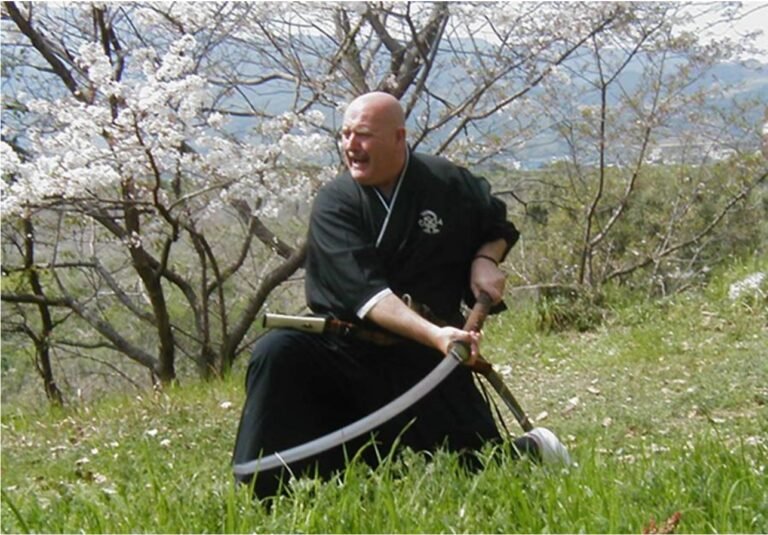
Kage-ryū (影流) is a classical sword school founded around 1550 by Yamamoto Hisaya Masakatsu, a retainer of the Tachibana clan in Kyushu. It was an otome-ryū—a tradition kept within the clan—and preserved largely unchanged while many other long-sword styles disappeared or evolved.
Weapons and Practice
The ryū is known for battojutsu with exceptionally long blades, up to 4 shaku (≈120 cm), some weighing over 3 kg. Training covers long-range cuts, thrusts, close-quarters responses, use of the short maezashi, and methods suited to armoured and mounted combat as well as indoor defence.
Purpose and Benefits
Practice builds balance, timing, and control with heavy weapons, cultivating strength, precision, and composure. It also offers direct engagement with Japan’s warrior heritage—preserving strategies, footwork, and tactics developed for real combat—while fostering discipline, focus, and respect for tradition. Drawing such a large blade requires skill and builds flexibility and power in the waist and legs.
Tradition Today
Still linked symbolically to the Tachibana family, Kage-ryū persists in small groups in Japan, Canada, and the U.S., transmitting a rare long-sword lineage of sixteenth-century battojutsu without modern rank structures. Our practice is guided by the sole inheritor of the art Shihan Colin Watkin.
*Kage-ryū is not to be confused with the Kage Ryu (陰流) of Aizu or it’s descendent arts. There is no relation.
**Battojutsu is synonymous with iaijutsu. It means sword unsheathing art.
At Calgary Rakushinkan there are several other arts that we practice on occasion that are less core to our practice and yet we find them extremely valuable.
There are more auxiliary, complementary arts that we practice, but for the time being we will not make them public. Stay tuned…